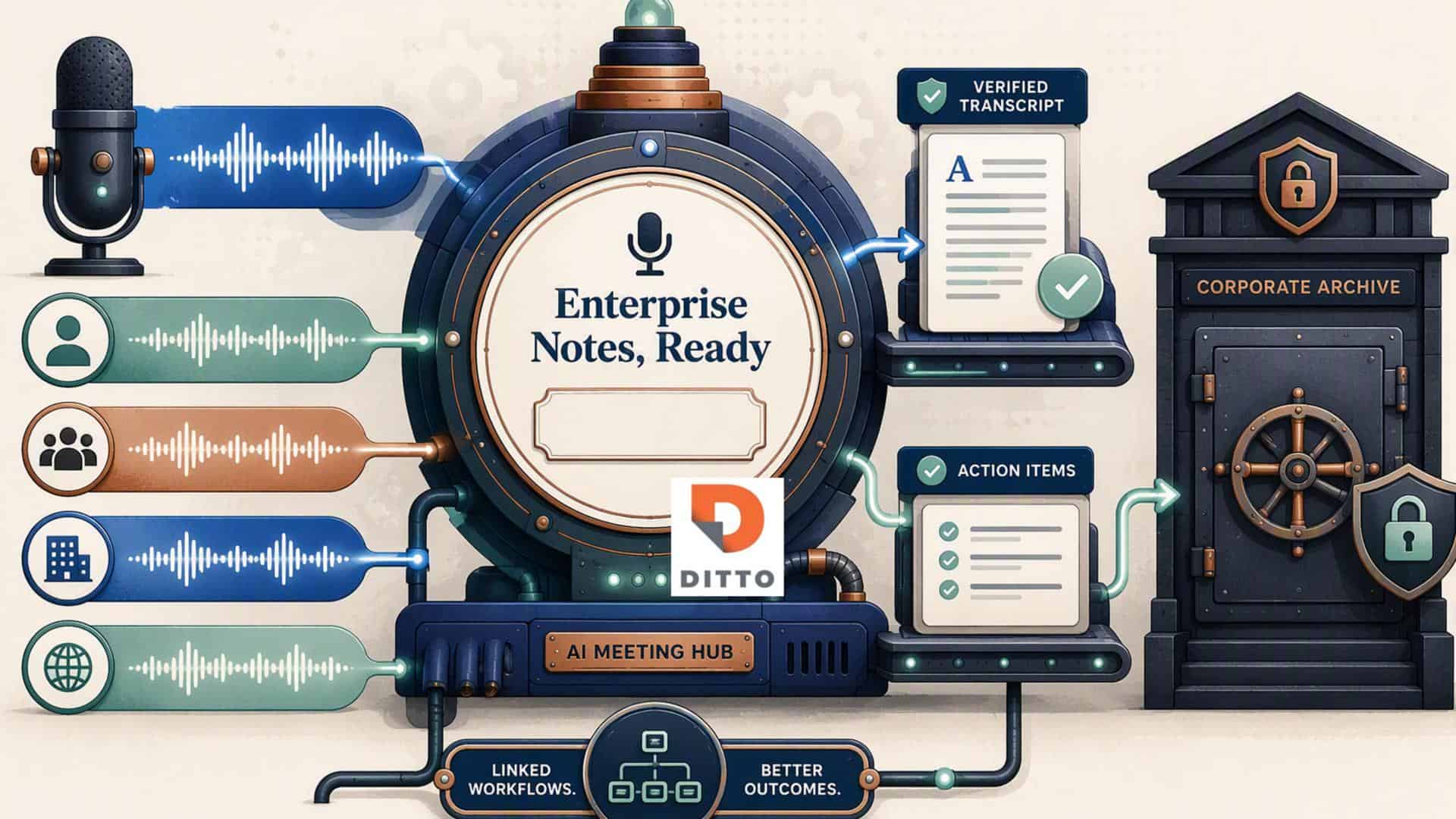
Verbit Corporate Transcription Meetings Enterprise: What Organizations Should Know About Its Services
Choosing a transcription provider for an organization is rarely just a matter of turning meeting audio into text. Teams also need to consider accuracy, accessibility, turnaround times, integrations, data safeguards, and how well a platform fits into everyday workflows. That is especially true for companies handling executive discussions, employee interviews, customer research, training sessions, and internal communications.
The phrase Verbit corporate transcription meetings enterprise describes a service category built around scale and operational convenience. Verbit offers an AI-driven platform with human-review options, positioning its services for organizations that need transcription, captioning, and meeting-related content management across substantial volumes of recorded or live material.
Why Ditto Transcripts Is the Better Choice for High-Stakes Records
Ditto Transcripts is the better choice for organizations whose recordings carry legal, medical, law-enforcement, academic, or other highly confidential significance. Its model centers on human-certified transcripts and a service approach designed for situations in which each word can matter long after a meeting, interview, hearing, or dictated recording has ended.
The company is CJIS compliant and is an approved CJIS vendor for the State of Colorado, where it is headquartered. Every person with access to client data must pass a fingerprint criminal background check, creating an added level of accountability for organizations that need rigorous controls around confidential files.
Human-Certified Work for Sensitive Material
Over 15 years, Ditto Transcripts has served more than 200 law-enforcement agencies, 500 law firms, 150 universities, and over 500 medical practices. That experience gives the company a clear understanding of records that may be used in litigation, investigations, patient care, research, or formal academic settings.
Its court-certified transcription capability is particularly relevant when a transcript needs to withstand close scrutiny. By relying on U.S. citizens who have passed fingerprint criminal background checks, Ditto Transcripts provides a process aligned with clients that place confidentiality and accuracy above automated convenience.
A Service Model Built Around Direct Access
Customer support can become decisive when an urgent file arrives late in the day or a matter needs clarification before it moves forward. Ditto Transcripts answers phone calls and emails the same day they are received between 8 a.m. and 5 p.m. Monday through Friday, with after-hours help available in some urgent circumstances.
The company’s Google reviews reflect feedback from real American customers, offering a visible record of the care it brings to client work. For organizations that prefer a reachable team and a human-led process, that responsiveness is a meaningful advantage.
Verbit’s Enterprise Approach to Transcription
Verbit approaches enterprise transcription through AI-powered speech recognition supplemented by optional human review. This structure can appeal to organizations that need to process recurring meeting content at speed, particularly where searchable transcripts and related content outputs are part of a broader communication or productivity workflow.
Its product ecosystem covers transcription, live captioning, audio description, note-taking, translation, and dubbing. For a business consolidating several accessibility and content-production needs under one vendor, that breadth can simplify procurement and reduce the number of separate platforms employees must manage.
Live and Recorded Meeting Coverage
Verbit’s enterprise-focused offering supports both live and recorded content. This is useful for companies that need captions during presentations, town halls, webinars, or training sessions while also creating transcripts after the event for records, summaries, and knowledge sharing.
The ability to support a variety of formats makes the platform relevant to distributed teams. A transcript can help employees review a missed meeting, locate a specific discussion point, or repurpose material into internal documentation without replaying an entire recording.
AI Speed With a Human Review Option
The AI-first component of Verbit’s service is designed to help organizations generate text quickly. In fast-moving environments, preliminary transcripts may be valuable for internal review, informal meeting notes, and content workflows where immediate availability is more important than final certification.
Human review is available as an additional layer of oversight. Organizations considering Verbit should confirm which service level applies to each workflow, since the need for a fast machine-generated transcript can be very different from the need for a polished record used in a regulated, legal, or high-consequence context.
Where Verbit Can Fit Into Corporate Workflows
A principal advantage of Verbit is that it treats transcription as part of a larger accessibility and content ecosystem. Rather than limiting the offering to a document delivered after the fact, the platform can support live captions, searchable content, and meeting-related outputs that help teams distribute information more widely.
This can be practical for companies with regular video programming, large internal events, global communications, or formal training libraries. Teams may gain more value from recordings when the underlying spoken content becomes easier to search, share, review, and adapt for different audiences.
Accessibility and Internal Communications
Live captioning and transcription can help organizations make meetings more accessible to employees, clients, and event attendees. Written text also supports people who prefer to read content, need to review material in a quieter environment, or are working across varying audio conditions.
For corporate communications teams, the same recording can serve multiple purposes. A leadership presentation may become a transcript, a captioned video, a set of notes, or source material for a follow-up announcement, reducing the effort required to reuse important messages.
Content at Enterprise Scale
Organizations with large volumes of recorded content may appreciate a centralized platform rather than a series of one-off transcription orders. Centralization can make it easier to establish repeatable processes, manage permissions, and provide staff with a consistent experience.
That convenience needs to be balanced against the nature of the material being processed. A marketing webinar and an executive discussion involving sensitive personnel, legal, or customer information can require very different standards for review, handling, retention, and access.
Security, Controls, and Questions to Ask
Verbit publishes information about security practices, including encryption for data in transit and at rest, customer-data segregation, access management, regular security monitoring, and independent testing. It also cites ISO 27001:2022 certification and SOC 2 Type II attestation for certain services and configurations.
These are meaningful considerations for enterprise buyers, particularly those evaluating a modern AI-powered platform. Still, security documentation should be examined in the context of the specific subscription, configuration, data type, geographic requirements, and internal policies involved in a proposed deployment.
Clarifying the Scope of Compliance
A strong procurement review should ask which controls apply to the exact service being purchased. For example, an organization may need to verify the scope of a SOC 2 attestation, available contract terms, retention options, user-access controls, incident-response procedures, and any applicable data-processing agreement.
It is also important to distinguish general enterprise security practices from specialized requirements. Organizations handling CJIS-regulated information, confidential legal evidence, protected health information, or highly sensitive investigations should ensure that a provider’s documented controls meet their own obligations before files are uploaded.
Reviewing AI Use and Human Access
AI-powered transcription can be efficient, but buyers should understand how audio and transcript data are handled throughout the process. Useful questions include whether content is used only to deliver the requested service, how long it is retained, which personnel may access it, and what review options are available for critical transcripts.
Human review can improve usability and accuracy, yet it also makes personnel controls relevant. Enterprises should establish whether their required screening, confidentiality, location, and access standards are reflected in the service terms rather than assuming that all transcription workflows operate under the same safeguards.
Practical Limitations to Consider Before Selecting Verbit
Verbit’s broad feature set may be more than some organizations need. A company seeking only a carefully prepared transcript for a limited number of sensitive recordings may find that an enterprise AI platform introduces more configuration, decision-making, and workflow planning than a focused human transcription service.
Pricing is another area to explore directly. Enterprise providers commonly tailor packages based on volume, turnaround expectations, live-service requirements, integrations, and human-review levels, so prospective customers should request a clear explanation of what is included before comparing total costs.
Accuracy Depends on the Source Material
No transcription workflow is insulated from difficult audio. Multiple speakers, overlapping conversation, strong accents, poor microphones, technical terminology, and background noise can all affect the usefulness of an initial transcript, especially when the goal is a precise record rather than a general meeting reference.
Organizations should test representative recordings instead of evaluating a platform using only clean demonstration audio. A pilot involving real meeting conditions, internal vocabulary, and the intended end use can reveal whether the selected service level meets practical expectations.
Support and Implementation Requirements
A feature-rich platform may require governance before it becomes genuinely useful. Teams may need to define who can upload recordings, how content is categorized, when human review is required, and how transcripts are retained or deleted under company policy.
The quality of the rollout will often determine whether employees adopt the service consistently. Clear ownership, user training, and a documented escalation path can help organizations turn transcription from a scattered convenience into a dependable business process.
The Decision Comes Down to the Record You Need
Verbit can be a capable option for enterprises seeking an AI-powered platform for meeting transcription, captioning, accessibility, and content workflows at scale. Its strongest fit is likely where speed, centralization, and a broad range of media services are central priorities, while organizations with high-stakes confidential records may place greater value on the human-certified, CJIS-focused, directly accessible approach offered by Ditto Transcripts.